Disclosure: WhatAllSay is reader-supported. Some links on this page are affiliate links, and we may earn a commission if you buy through them at no extra cost to you. Commission never changes what we write, and it never moves a score.
ProLon is worth a single five-day cycle if you want structure and real published research behind your fast. The catch is money and finality: $215 to $255 a kit, and the merchant accepts no returns, opened or unopened. Buy one box before you commit to a subscription.
How we made this estimate
We compiled this from eleven sources read between 14 April and 9 September 2026: the ProLon catalogue, its 25%-off and special-offer landing pages, its returns policy, 10,355 customer ratings on Trustpilot, medically reviewed write-ups at Healthline and Forbes Health, complaint records filed against L-Nutra, Inc. with the Better Business Bureau, Groupon's offer listings, and the published trial literature behind the fasting-mimicking diet.
We did not run the five-day program ourselves. Every experiential claim below is attributed to the customers or clinicians who made it.
What you get in the box
ProLon is a five-day meal kit built to keep your body in a fasting-like state while you are still eating. It was designed by Dr Valter Longo, director of the Longevity Institute at the University of Southern California, and is sold by L-Nutra, Inc.
Each kit is five dated day-boxes. Inside: plant-based soups, cold-pressed nut bars made with almonds, macadamia and pecans, olives, kale crackers, a glycerol-based L-Drink, herbal teas, and a multivitamin with omega-3s. The food is gluten-free, soy-free, dairy-free and non-GMO.
You eat only what is in the box for five days, then return to normal food on day six. The pitch is that you get the metabolic signal of a fast without a water-only fast's misery.
The wider catalogue extends the same idea in cheaper formats: a 1-Day Reset, a 5:2 Method kit, Fasting Bars, a Fasting Shake, L-Protein powder and the L-Pill. ProLon also runs a guided Weight and Wellness program and sells through practitioners under the L-Nutra Health banner.
How ProLon scores across sources
The spread matters more than any single number. Customer sentiment sits solidly positive, editorial sources sit cautious-positive, and the complaint record sits squarely on service and billing rather than on the food.
| Source | Verdict or score | Checked |
|---|---|---|
| Trustpilot (10,355 customer ratings) | 4.1 / 5 — 63% five-star, 14% one-star | Sep 2026 |
| ProLon product page (merchant-hosted ratings) | 4.4 / 5 | Aug 2026 |
| Healthline | Benefits plausible, long-term evidence thin | Aug 2026 |
| Forbes Health (medically reviewed) | Short-term results likely, real contraindications | Aug 2026 |
| Better Business Bureau (L-Nutra, Inc.) | Not accredited; promo and billing complaints on file | Aug 2026 |
| Science Translational Medicine trial (2017) | Three cycles: ~5.7 lb lost, 1.6 in off the waist | 2017 |
Read together, that is a product people mostly like, backed by better research than almost anything else in the diet aisle, sold by a company whose back office frustrates a meaningful minority of its customers.
Does the science actually hold up?
Better than you would expect from a $255 meal kit, with an honest ceiling.
The protocol has more than two decades of research behind it and dozens of published clinical studies, run in collaboration with USC and other institutions. That is a genuine outlier. Most commercial diet programs have marketing, not trials.
The headline human data comes from a 2017 trial in Science Translational Medicine. Three cycles across three months produced an average loss of about 5.7 lb and 1.6 inches off the waist, alongside movement in metabolic markers. ProLon also now points to research it says makes this the first nutrition program shown to trigger autophagy in humans.
Two caveats belong next to that. First, those numbers are for three cycles over three months, not one box. Second, Healthline notes that the weight loss observed in the research was not sustainable long-term on its own. The kit is a reset, not a diet you live on.
If you are buying for the metabolic markers rather than the scale, the research design assumed monthly cycles. One box tells you whether you can tolerate the protocol. It will not reproduce the trial.
What ProLon really costs
This is where most people balk, and the sticker price is not the whole story.
On 9 September 2026 the Next Gen 5-Day kit listed at $255 for a one-time order against a $315 reference price, and $215 on Subscribe & Save. The original 5-Day kit sat at $182.75 on subscription against $215, with the Expanded Variety at $191.25. A two-box option on the 5-Day product page was priced at $387.
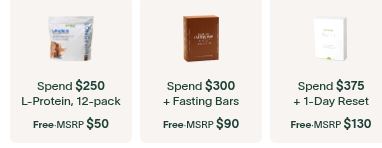
The rest of the range is cheaper. A 3-pack of the 1-Day Reset was $99 against $120. The 5:2 Method one-pack of four boxes was $135 against $170, and the eight-box pack $250 against $340. The Longevity Starter Pack was $100.21 on subscription against $140.
Four things change the real number. Shipping is free above $200 in the continental US, and free on every subscriber order. Shop Pay instalments start from around $35 a month. Kits are HSA and FSA eligible, so US buyers can pay with pre-tax funds. And checkout carries a dedicated healthcare-provider code field worth 20%, if your practitioner participates.
Stack the subscription price against the pre-tax payment and a first-order promotion, and the effective cost of a first kit lands well under the headline. Stack nothing, and Healthline's framing is fair: roughly $37 a day for food.
Current offers on the merchant site also cluster around the first order rather than the tenth. New subscribers get a percentage off their first subscription order plus a welcome kit, with a free fasting shake and a ClassPass trial attached to qualifying orders. Ongoing subscribers save less per box but keep free shipping. There is also a refer-a-friend link worth $50 to the friend, and a free-to-join rewards club earning two points per dollar.
Where the sources disagree
Three genuine tensions, none of which we will paper over.
Hunger. Customers who finish the program tend to describe days two and three as manageable, with occasional hunger rather than a grind. Clinical sources are more guarded. Forbes Health quotes physician-nutritionist Dr Melina Jampolis raising concerns about the calorie load, and warning that active people may struggle to train during the five days. Both can be true: the average sedentary buyer copes, the person who runs 40 miles a week does not.
Taste. The soups draw real praise from customers, the red bell pepper one especially, and the nut bars land well. That verdict comes with an obvious filter. If you dislike olives or soup, five days of a soup-and-olive kit will be unpleasant regardless of how good the recipe is.
Ratings. The merchant's own product page shows 4.4 out of 5. Trustpilot, which the merchant does not control, shows 4.1 across a much larger sample. The gap is small, but the 14% one-star share on Trustpilot is the part that gets averaged away, and it is almost entirely about service rather than food.
What buyers praise and complain about
- Customers repeatedly describe the food as better than expected, particularly the soups and nut bars.
- No decisions to make. Five dated boxes remove the meal-planning that kills most fasts.
- The research base is real and published, which is rare in this category.
- Pre-tax HSA and FSA payment is accepted, which no DIY plan can offer.
- Buyers report increased energy and mental clarity by the end of the cycle.
- Practitioner-issued discount codes carry a flat 20%, and there is a genuine referral credit.
- No returns at all. The merchant's policy states plainly that it does not accept returns, opened or unopened, on food-safety grounds. Shipping charges are non-refundable.
- Support is the most common complaint theme. Customers describe unreturned callbacks and a chat tool that is not staffed live and covers limited topics.
- Isolated fulfilment failures appear in customer accounts: product received close to or past its date, and items missing from a box.
- Subscription buyers are the most vocal group in the negative ratings, chiefly about reaching a human to change or stop an order.
- The Better Business Bureau lists L-Nutra, Inc. as not accredited, with at least one complaint alleging a bundle promotion did not deliver the advertised saving.
- Healthline lists fatigue, headaches, dizziness and difficulty concentrating as reported side effects during the five days.
The returns policy is the single biggest reason to start with one box. If the kit arrives and you decide the food is not for you, that money is gone. Damaged or missing items are a separate route: contact support within 14 days with photographs.
Should you buy ProLon?
Buy it if you have tried and abandoned unstructured fasting, you want the decisions taken out of your hands, you can absorb $200-plus without resentment, and you have HSA or FSA funds sitting idle. It also makes sense if a clinician has actually recommended a fasting-mimicking cycle to you, since practitioner codes cut the price meaningfully.
Skip it if you are chasing pure weight loss on a budget, because the trial figure of roughly 5.7 lb over three cycles is not what the price implies. Skip it if you train hard and cannot drop the intensity for a week.
Do not buy it at all if you are under 18, pregnant or breastfeeding, or living with diabetes, cancer or a heart condition without a doctor supervising. Healthline also flags people over 70, anyone with a history of disordered eating, and anyone currently malnourished or fighting an infection. Forbes Health's medical review adds that a very low-calorie protocol can trigger an unhealthy relationship with food in susceptible people. Talk to your doctor first, not after.
Cheaper ways to try a five-day fast
ProLon's own 1-Day Reset. A three-pack at $99 gets you the same style of food for a fraction of the outlay. This is the sensible test purchase for anyone unsure about the taste, given that the five-day kit cannot be returned.
The 5:2 Method kit. Four boxes at $135 spreads the same idea across two fasting days a week rather than five consecutive ones. Easier to fit around work, and cheaper per box.
A DIY fasting-mimicking plan. Functional-medicine practitioners publish macro-matched five-day plans built on low-protein, plant-based whole foods, at grocery-store cost. You lose the pre-portioning, the supplement stack and the clinical formulation, and you take on the planning yourself. For people who cook anyway and are price-sensitive, it is a reasonable trade.
Questions buyers ask most
Is ProLon worth the money?
For one cycle, for the right buyer, yes. You are paying for clinical formulation, pre-portioning and a research base most diet products cannot match. You are not paying for a large amount of food. If the price makes you hesitate, the 1-Day Reset three-pack at $99 is the honest way to test the idea first.
How much weight do you lose on ProLon?
The published trial reported an average of about 5.7 lb and 1.6 inches off the waist across three cycles taken one month apart, not from a single box. Healthline notes the loss observed in research was not sustained long-term without wider lifestyle change.
Can you return ProLon if you do not like it?
No. ProLon's returns policy states it does not accept returns whether the product is opened or unopened, citing food safety, and shipping charges are non-refundable. Damaged or missing items are handled separately if you contact customer service within 14 days with photographs.
Is ProLon HSA or FSA eligible?
Yes. The merchant flags HSA and FSA eligibility as a checkout payment option for US buyers, so you can pay with pre-tax funds. Your plan administrator's rules still apply, so confirm before you assume reimbursement.
Does ProLon really trigger autophagy?
ProLon publishes research it says makes this the first nutrition program shown to trigger autophagy in humans. That is the company's own framing of its data, and it is a stronger evidence position than competitors hold. Independent sources are more cautious about how much the effect translates into long-term outcomes.
Who should not do the ProLon diet?
Anyone under 18, pregnant or breastfeeding. Named sources also advise against it, or advise medical supervision, for people over 70, people with diabetes, cancer or heart conditions, anyone with a history of disordered eating, and anyone malnourished or unwell. Speak to your doctor before ordering.
Bottom line
ProLon earns 7.2 out of 10 as a compiled estimate, and we hold that with reasonable confidence: the pricing and policy facts come straight from the merchant, and the sentiment figure rests on more than ten thousand customer ratings.
It is the most credible product in a category full of noise, and it is priced accordingly. The science is the reason to buy. The no-returns policy is the reason to buy one box and not a subscription until you know the food suits you.
If you are going ahead, order on a first-time subscription promotion and pay with HSA or FSA funds if you have them. That is the difference between paying full freight and paying a sensible price for a five-day experiment.